Thursday, February 19, 2026

THE INDEFINITE IS FUNDAMENTAL


“The Tao that can be told is not the eternal Tao. The biosphere that can be described is not the biosphere that will become.”

"What’s the largest unsolved problem in complexity science? Getting beyond its utter dependence upon mathematics."

'Life is a nonequilibrium, self-reproducing chemical reaction system that achieves: i. Collective autocatalysis, ii. Constraint Closure, iii. Spatial Closure. 


"In Critique of Judgment, 1793, Kant wrote: 'an organised being has the property that the parts exist for and by means of the whole.' He was trying to find a notion of natural purpose. Every living organism is a Kantian whole. You have a heart and a liver and a kidney and a spleen. They exist because they’re part of you, and you exist because of them. Once you’ve got the notion of a Kantian whole—of parts and whole—you can talk about the function of a part, non-reductively and non-circularly

 Inside the environment of the cell, viruses are Kantian Wholes that reproduce. The Parts of the virus, in the context of the cell, create multiple copies of the Parts of the virus that self-assemble into the mature virus Whole. It is of interest that a definition of life including that of a Kantian Whole classifies viruses as alive. Kantian Wholes are a special class of dynamical physical systems. A crystal is not a Kantian whole. The atoms of the crystal can exist without being parts of the crystal. A brick is not a Kantian Whole. A cell is a Kantian Whole."

'It is of the deepest importance that all living cells achieve constraint closure. Cells construct the very boundary conditions on the release of energy that constructs the very same boundary conditions. Cells construct themselves. Computers and locomotives do not construct themselves. Reproducing cells are fundamentally not von Neumann’s self-reproducing automata, (20). These are based on a “Universal Constructor.” To construct anything specific, the Universal Constructor requires specific “Instructions.” These are encoded in a physical system placed inside the Universal Constructor. The physically embodied instructions play dual roles: They are used to construct a copy of the Universal Constructor into which a physical copy of the physical Instructions is constructed and then inserted. The dual roles of the physical Instructions constitute precisely the distinction between software and hardware. In sharpest contrast, a living cell, via catalytic and constraint closure, constructs specifically itself. A cell is not a universal constructor requiring separate Instructions.'

"The function of your heart is that subset of its causal properties that sustains you. Your heart pumps blood. But your heart also makes heart sounds, and it jiggles water in your cardiac sac. Your heart makes indefinitely many different sets of causal properties. Unlike mathematics, the actual behaviour is physical, not symbolic. Mathematics misses the physicality."


Darwinian Exaptations or Evolutionary Co-Options as defined by Gould and Vrba: "(1) A character, previously shaped by natural selection for a particular function (an adaptation), is coopted for a new use—cooptation. (2) A character whose origin cannot be ascribed to the direct action of natural selection (a nonaptation), is coopted for a current use—cooptation." 


"Here’s a Kantian whole. It’s got a bunch of parts. Each part has a very large number—I will say indefinitely many—subsets of causal features. Any one of them could become of use. But from the use of a heart to pump blood, you cannot deduce that jiggling water in the pericardial sac might be of survival value. There’s no deductive relationship between the different uses of parts. And the word “use” is not in physics, but it is in biology. The implication is open biological evolution is real, and it’s real because parts come to have and have used different functions. So that underlying open evolution is not deducible.

So uses of things have the following three properties: they can’t be put into one-to-one correspondence with the integers; use of things is just a nominal scale; there’s no ordering relationship; you cannot deduce one use from another. Therefore, the indefinite is fundamental." 


"The indefinite is things with the property that they cannot be listed, cannot be ordered relative to one another, and cannot be deduced from one another. The definition is instantiated by the Darwinian pre-adaptations. This opposes Plato’s forms, the eternal realm, and the fundamental notion—which is central to Newton—that all the possibilities already exist. And that’s Newton’s pre-stated fixed-state space. At the pre-stated fixed-state space of quantum mechanics, biological evolution creates new possibilities. They come into existence. Tigers came into existence. A tearing head. And that’s why biological evolution is open-ended. But it also means the evolution of the biosphere is an undeducible propagated construction, not a tale of deduction. There is no theory of everything."


"We in the West have looked for 2,500 or 2,400 years on the basis of Plato’s Logos: the world is understandable, which is his internal realm, where all the possibilities already exist. The possibilities already exist—again, as Newton’s pre-stated state space. It’s the state space bit of quantum mechanics. It’s the pre-statement of probability theory. All the possibilities already exist; therefore you can calculate a probability. It’s the same thing thinking of statistical mechanics: all possibilities already exist. Essentially all of physics, all of complexity theory, is in the formal world. And essentially it’s in Plato’s world. 

But the evolving biosphere isn’t."


"-There are new possibilities. When the tiger and the gazelle evolved, tigers could eat gazelles, and the possibility that a tiger will catch a gazelle and get dinner is real. Three billion years ago, there wasn’t the possibility that the tiger exists. The possibility itself came into being. And it does so because Darwinian pre-adaptations really are new possibilities. Once a swim bladder exists, for example—it evolved because it was good at being a swim bladder, namely neutral buoyancy in the water column—but watch: once it’s true that there is a swim bladder, is it now possible that a worm could evolve to live only in swim bladders?

-Sure.

-Before there was a swim bladder, was that possible?

-No.

-New possibilities come to exist all the time in the evolving biosphere, and that’s outside of the purview of physics. So life depends on physics, but can’t be reduced to it. 

And if that’s right, then, beloved, there is no theory of everything—if you want the theory of everything to include an evolving biosphere."


"Technological evolution is the same thing. You cannot get a crossbow until you’ve got a bow. If you’ve got a bow, it is not hard to think about a crossbow. So technological evolution is doing the same thing. It is innovating based on what’s around, typically for a new use. And if it’s new, we see if it’s patentable. It’s not invented.


Did you ever see this wonderful series of James Burke called Connections? It’s about the evolution of technology. It’s wonderful. One of them is about the evolution of the carburetor. I think it’s the carburetor from a Persian biologist’s coarse perfume. Or the cannon evolved from a church bell. Think of the shape of the bell, squeeze it in, and it becomes a cannon. That’s “cannon” for “invented.” Most inventions are pre-adaptations—Darwinian exaptations—of things that already exist. There’s not a pre-existing space of all the possibilities."


"If we cannot say what will next become, we cannot pre-state it like the now. We don’t know the sample size of the process, so we can’t define probability, so we can’t define “random,” so we can’t assess risk for you true capitalists. You kind of know that.

And now I get something fundamentally cultural to it. It means Plato and Newton gave us a machine. The world is a machine. It’s a clockwork. But a machine has a property that we can master it, and we have dominion, which is what Roger Bacon told us.

In fact, we cannot reason about what is going to become. The response has to be participation, not dominion. So it got into some kind of cultural transformation, there is something about humanity and participation and wisdom—not dominion power.

It’s this stuff glimmering in me, and I don’t know."


Sunday, October 19, 2025

"ALL LIGHT, EVERYWHERE"


“A prayer for all the possibilities outside of these failed frames” 


"The transit of Venus and the solar parallax... 

Any measurement is only as accurate as the measuring instrument. Prior to 1874, astronomers had to rely on highly trained specialists for their observations. These specialists activated a timekeeping device once the Transit began and stopped the device to mark its end. But every observer had different reflexes, resulting in different times, and thus different calculations. 

Another obstacle stood in the way of accurate observation. As Venus approached the border of the Sun, the planet appeared to liquefy. A phenomenon caused by distortions in the planet's atmosphere as well as the lens of the telescope. Astronomers called this phenomenon the Black Drop effect. The act of observation obscures the observation. 


Where the world meets the image of the world, the image falls apart.

For scientists, the transit provided a unique opportunity for technology to overcome the limitations of the imperfect human observer. But not everyone was convinced of their success. The philosopher Henri Bergson, writing on the Transit, said that any attempt to record a true measurement was doomed to failure. Venus, as it appeared to the scientist, did not reflect the true nature of Venus, but merely the limitations of human observation. 


He writes: 

There is no form, since form is immobile and reality is movement. What is real is the continual change of form: form is only a snapshot view of transition."


"The photographic revolver inspired by the semi-automatic Gatling gun. Applying automation to observation. The human observer is removed. There are no original plates of the 1874 transit left in existence."

"Your camera. Your mount. And your hand. The only time it should leave your body is when it is on its charger. On your body. At all times." 

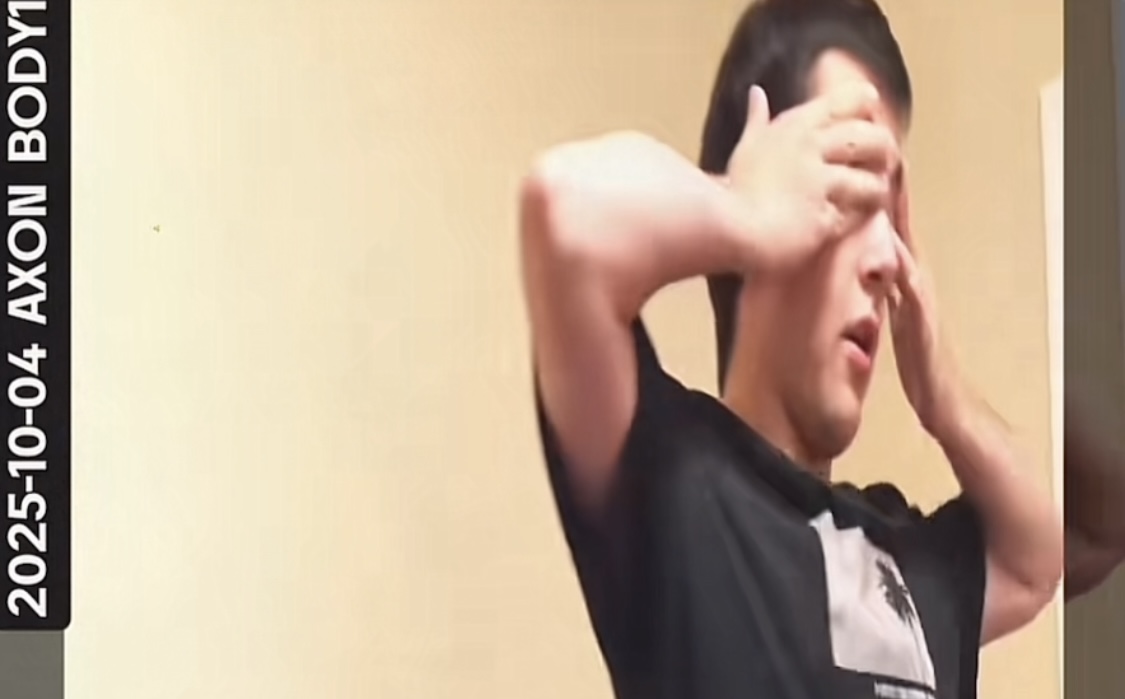
"The Axon body camera's recommended placement is on the centre of the chest. It does not capture the direct field of view of the operator, but from a slight parallax. The operator is not seeing for themselves, but as an extension of the state. The wide angle of the lens is meant to capture as much of the surrounding environment as possible. But the wide angle also exaggerates motion. Subjects appear closer than they are. Their movements more severe.


Axon is the literal frame through which an event is seen. These elements are used to prove that the image was captured at a certain place, at a certain time, and according to a set of standard protocols. These protocols allow the image to be admitted into court as evidence. A neutral witness, free from the imperfections and bias of human memory. But a blind spot is exploited. The frame of the body camera erases the officer from its view. A view is placed in the body of the officer, watching what happened to them, and not what they did. The courts view this image as an objective witness, but the camera is designed to limit what can be seen by this witness. 


There's always a body, behind the body camera." 


Marey invented a new camera that improved and miniaturised Janssen’s design. He called his invention the photographic rifle. It was the first portable movie camera. With his rifle, Marey turned his gaze from the stars to life on Earth. In the studio, Marey performed a series of experiments that studied the mechanics of motion. To Marey, these cameras were not just a better eye, but an entirely new sensory organ, capable of revealing the invisible patterns of the world. He writes: 


“Not only are these instruments sometimes destined to replace the observer, but they also have their own domain where nothing can replace them. When the eye ceases to see, the ear to hear, the touch to feel, or indeed when our senses give deceptive appearances, these instruments are like new senses of astonishing precision. 

Our senses may lie to us, machines cannot.”


“Marey went beyond simply photographing motion, when motion was captured, it was automatically converted into data. Seeing and interpretation were already combined in the same device. Before these machines, the world becomes a resource for the extraction of data. They see. They measure. They compute. As a scientist, Marey hoped to uncover the natural order of the world. But his methods actively concealed the unnatural conditions of this process. These instruments do not reproduce the world, they produce new worlds. 

His subjects were not in nature, but in the controlled setting of the studio. What would these images be without this theatrical set? Who gets to frame another as subject?”


“What is a science where the self is held intact?” —Donna Harway, ‘Persistence of Vision’ 

“The eye only sees in each thing that for which it looks, and it only looks for that of which it already has an idea.” 


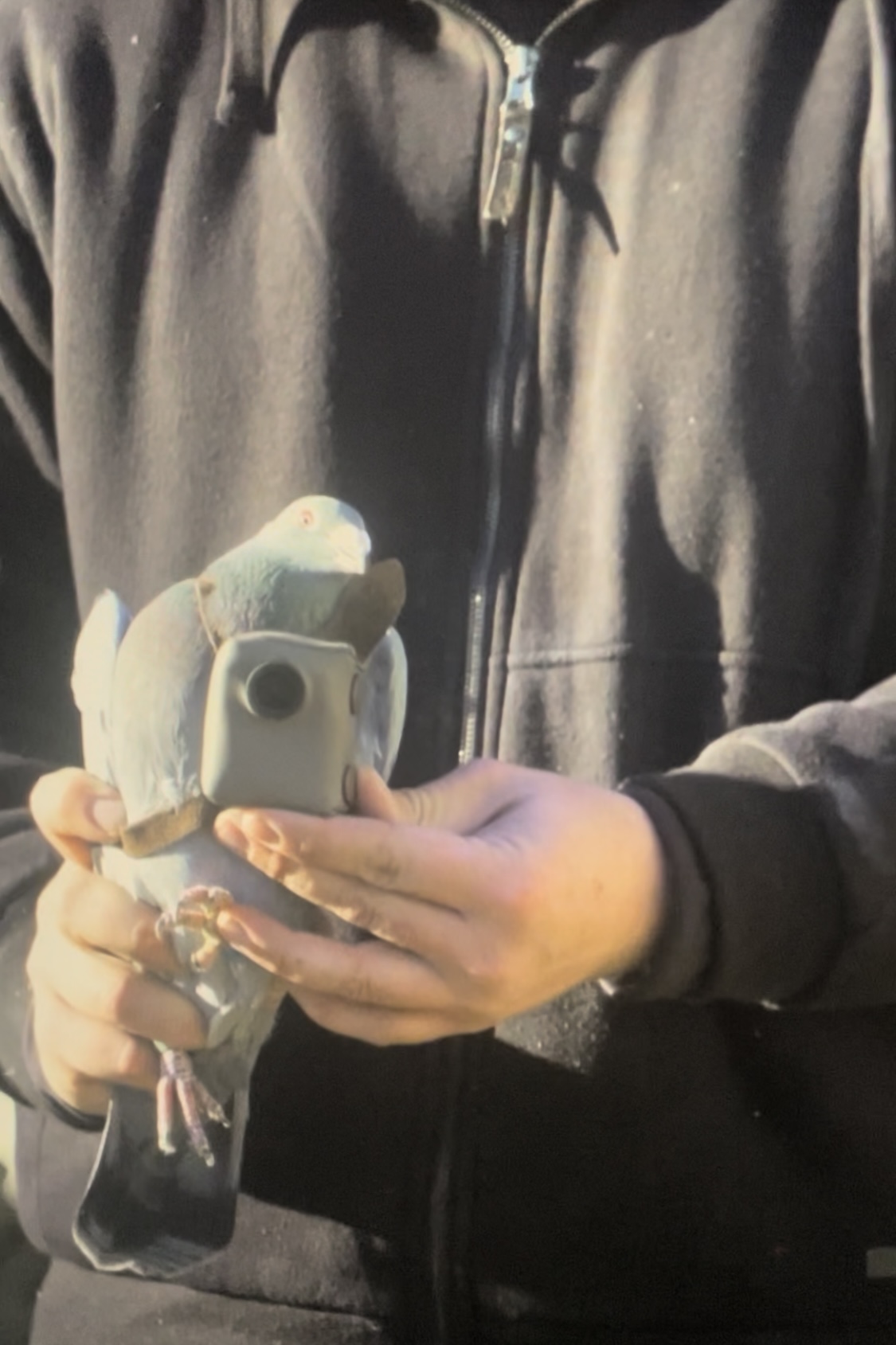
In Neubronner’s diary we encounter a dream: “A dream last night where I was flying over Kronberg. At some point in my journey, I looked down to see a man on top of a roof. On closer inspection, I saw that it was not a man, but one of my pigeons. A great vertigo overcame me. I didn’t know who was flying and who was standing still. I realised that we must be orbiting each other, tethered by the mutual gravity of our gaze.” 


“We all feel that there is something more. That the curtain has not yet been lifted. There is a prophet within us, forever whispering that behind the seen lies the immeasurable unseen.” —Frederick Douglass 


“An act of seeing is always an act. An intervention into the world. We do not see the world. We see this intervention.” 


“The frame excludes the world beyond its edges. But if we look hard enough there’s always an edge that creeps back in.” 

Monday, September 15, 2025

QANAT


DISAPPEARED FOR 5 YEARS 

STUDYING THINGS I’VE NEVER SEEN 


KAREZ 


QANAT


FALAJ


[But now I’m back 

+ someday]


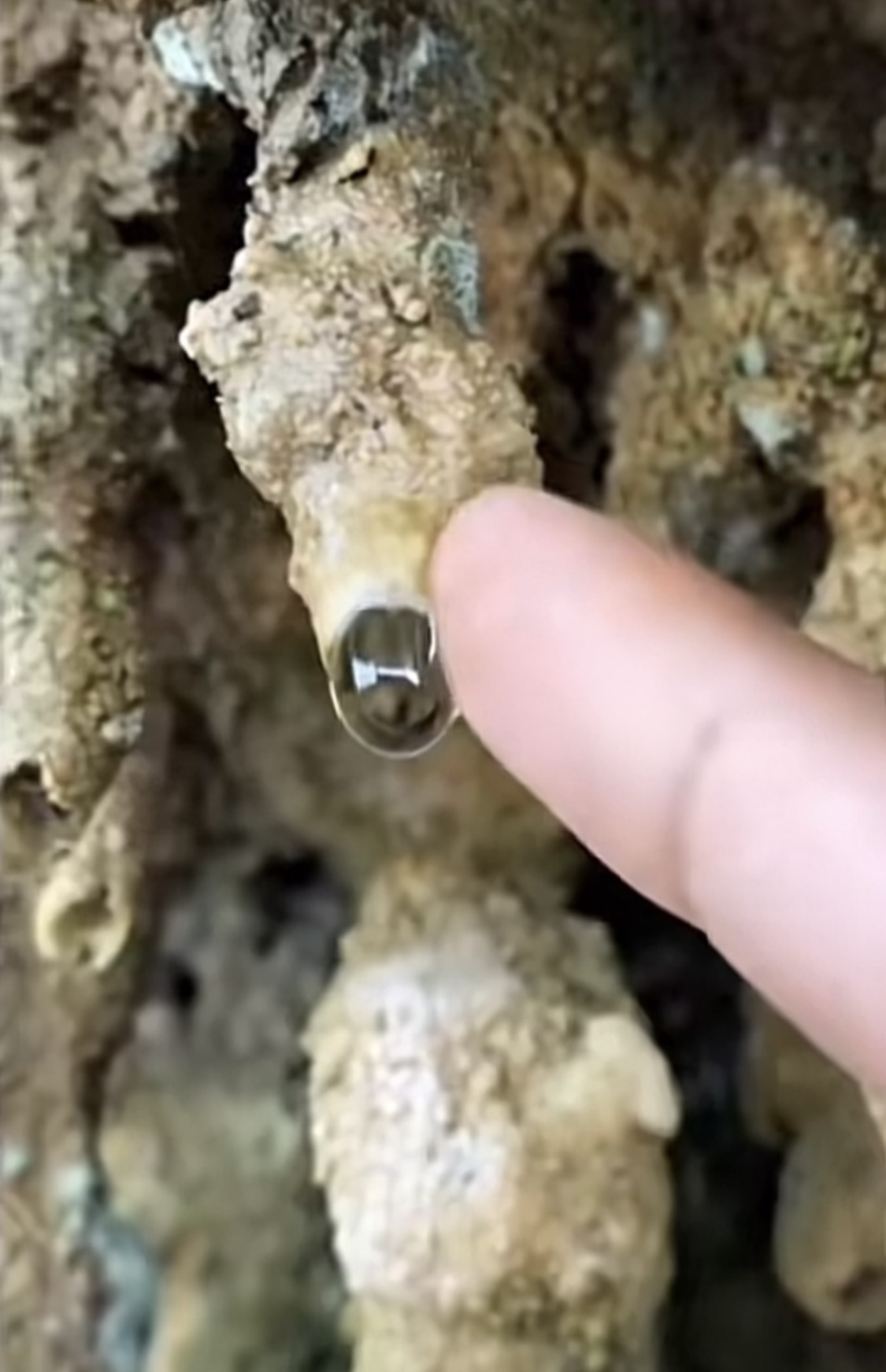
“Qanats milk the earth while deep wells suck earth blood” 


Truth has weight. If we consider substance, water, Truth becomes unavoidable. 


Couldn’t get into any of this, and I didn’t throughout my studies. The work is practical, it will stay that way. 

But now I can admit it, I was always distracted. Reading about the mechanics and the social infrastructure of the qanat made it difficult for me not to think about Tawhid, Abubakr Mohammad Karaji’s The Extraction of Hidden Waters, Whitehead’s ideas about bodily sensation and causal transmission, prehension, conceptual reversion, and the ingress of novel propositions as the origin for evolutionary processes / Schelling’s discussion of interior/exterior ecologies, or dynamic polarities unified in the Absolute, Kant’s 12 “pure” concepts, and, yes you know, Negarestani’s ()hole complex.


This idea that the universe works mechanistically toward beauty, aesthetic beauty, alright, I don’t know about that. I cannot corroborate this. But I like Whitehead’s ideas about bringing conflict into contrast: intensity (the foundation of beauty) is achieved through simultaneously holding as many contrasts as is possible. Who was so ‘myriad-minded,’ the progenitor, that they blended oppositions to such a degree that the original qanat was born over 3,000 years ago? They had to start by valuing barrenness and aridity deeply enough to transform it. 


------------------------------------------------------


"... Schelling is not asserting this organic conception of nature as a regulative principle. The organizing principle which grounds natural organization is an objective entity. Moreover, Kant’s system of ends must bottom out in some unconditioned final end, which must, because it is unconditioned, be external to nature. For Kant, this is the human being under the moral law. Schelling’s difference in terminology—calling nature an organism rather than a system of ends—indicates a substantive philosophical difference. Nature, for Schelling, is not teleologically grounded in an external end, but rather is its own end, much like an organism. Schelling refers to nature as “a whole that is in-itself complete [ein in sich selbst vollendetes Ganzes].” Like an organism, it is cause and effect of itself. This self contained completion is in contradistinction to Kant’s externally dependent and directed nature. It is noteworthy that Schelling’s formulation universal organism is paradoxical in the context of Kant’s philosophy: organisms are grounded in particular forms of organization, mechanism is that which is universal. Schelling is drawing these together in the claim that the highest kind of organization is universal in scope—it subsumes all of nature—but also unitary and particular—it is an organism."  --N. Fisher 


------------------------------------------------------------


“In ()hole complex, on a superficial level (bound to surface dynamics), every activity of the solid appears as a tactic to conceal the void and appropriate it, as a program for inhibiting the void, accommodating the void by sucking it in to the economy of surfaces or filling it.”


“Once nemat-space begins its infestation, the periphery on the zone of excitations does not necessarily start from visible surfaces on the crust: Active surfaces emerge from everywhere, from the surface-crust mode of periphery to innermost recesses. The ()hole complex carves ultra-active surfaces from solidus when it digs holes, unleashes delirious itinerant lines and constructs its nematical machines, installing peripheral agitations on the surfaces it cuts from internal solid matrices. Everywhere a hole moves, a surface is invented. When the despotic necrocratic regime of periphery-core, for which everything should be concluded and grounded by the gravity of the core, is deteriorated." 


---------------------------------------------------------


"Mohammed Hassan related a saying that at the rise of a star you can feel a breeze on your face for a

moment,– so you do not even need to see the star to know it has risen. There is also a saying that

when all is frozen, Suhayl has struck (risen), and their babies may urinate blood. This star is said to

rise in the east but to set a bit off west, which does not fit with the usual (literary) identification of

Suhayl as Canopus (α Carinae), which rises SSE." --Nash 


------------------------------------------------------------


Category V.: The Category of Conceptual Reversion 

There is secondary origination of conceptual feelings with data which are partially identical with, and partially diverse from, the eternal objects forming the data in the primary phase of the mental pole; the determination of identity and diversity depending on the subjective aim at attaining depth of intensity by reason of contrast.”


“… Then in synthesis, there must always be a ground of identity and an aim at contrast. The aim at contrast arises from the depth of intensity promoted by contrast. The joint necessity of this ground of identity and an aim at contrast. The aim at contrast arises from the depth of intensity promoted by contrast. The joint necessity of this ground of identity, and this aim at contrast, is partially expressed in this Category of Conceptual Reversion. This ‘aim at contrast’ is the expression of the ultimate creative purpose that each unification will achieve some maximum depth of intensity of feeling, subject to the conditions of its consecrescence.” 


“An enduring object gains the enhanced intensity of feeling arising from contrast between inheritance and novel effect, and also gains the enhanced intensity arising from the combined inheritance of its stable rhythmic character throughout its life-history. It has the weight of repetition, the intensity of contrast, and the balance between the two factors of the contrast. In this way, the association of endurance with rhythm and physical vibration is explained. They arise out of the conditions for intensity and stability. The subjective aim is seeking width with its contrasts, within the unity of a general design. An intense experience is an aesthetic fact, and its categoreal conditions are to be generalised from aesthetic laws in particular arts.” 


“God and the World are the contrasted opposites in terms of which Creativity achieves its supreme task of transforming disjoined multiplicity, with its diversities in opposition, into concrescent unity, with its diversities in contrast. In each actuality, there are two concrescent poles of realisation—‘enjoyment’ and ‘appetition,’ that is, the ‘physical’ and the ‘conceptual/For God, the conceptual is prior to the physical; for the World, the physical poles are prior to the conceptual poles.” 


“Opposed elements stand to each other in mutual requirement. In their unity, they inhibit or contrast. God and the World stand to each other in this opposed requirement. God is the infinite ground of all mentality, the unity of vision seeking physical multiplicity. The World is the multiplicity of finites, actualities seeking a perfected unity. Neither God, nor the World, reaches static completion. Both are in the grip of the ultimate metaphysical ground, the creative advance into novelty. Either of them, God and the World, is the instrument of novelty for the other.” 


“In every respect God and the World move conversely to each other in respect to their porcess. God is primordially one, namely he is the primordial unity of relevance of the many potential forms; in the process he acquires a consequent multiplicity, which the primordial character absorbs in its own unity. The World is primordially many, namely, the many actual occasions with their physical finitude; in the process it acquires a consequent unity, which is a novel occasion and is absorbed into the multiplicity of the primordial character. Thus God is to be conceived as one and as many int he converse sense in which the World is to be conceived as many and as one. The theme of Cosmology, which is the basis of all religions, is the story of the dynamic effort of the World passing into everlasting unity, and of the static majesty of God’s vision, accomplishing its purpose of completion by absorption of the World’s multiplicity of effort.” 


THE INDEFINITE IS FUNDAMENTAL

“The Tao that can be told is not the eternal Tao. The biosphere that can be described is not the biosphere that will become.” "What’s t...