"Therefore, it's almost miraculous that Jacques Debierue was noticed at all. When you think about the peculiar mixture of hope and disillusionment of the twenties, he seems to be the most unlikely candidate of all the artists of the time to be singled out for fame. And he was studiedly indifferent to the press.
One painter, a true archetype, can hardly be said to constitute a movement, but Debierue rose above the Parisian art world like an extended middle finger. Paris critics found it embarrassing to admit that none of them knew the exact date his one-man show opened. The known details of the discovery of Debierue, and the impact of his influence on other painters, has been examined at some length by August Hauptmann in his monograph entitled Debierue. This isn't a long book, not for the work of a German scholar, but it's a well-documented study of Debierue's original achievement.
There isn't any mass of published work on Debierue, as there is on Pablo Picasso, but Debierue's name crops up all the time in the biographies and autobiographies of other famous modern painters--usually in strange circumstances. The frequent mention of his name isn't surprising. Before Debierue was in the art world, he was of it. Because he framed their paintings, he knew personally, and well, most of the other firsts of the war and postwar years."
"He was a picture framer?"
"At first, yes. Miro, De Chirico, Man Ray, Pierre Roy, and many other painters found it expedient to visit him in his tiny framing shop. He gave them credit, and until they started to make money with their work, they sorely needed credit. Debieru's name is brought up in the studies published on every important postwar development because he was there--and because he knew all the artists involved. But his only commonality with other innovators is the fact that he was a first in his own right as the acknowledged father of Nihilistic Surrealism. Debierue, by the way, didn't coin this term for his work.
The Swiss essayist and art critic, Franz Moricand, was the first writer to use this term with reference to Debierue's art. And the label, once attached, stuck. The term appeared originally in Moricand's essay, "Stellt er nur?" in Mercure de France. The article wasn't penetrating, but other critics were quick to snatch the term 'Nihilistic Surrealism' from the essay. An apt and descriptive bridge was needed, you see, to provide a clear dividing line between Dada and Surrealism. Both groups have attempted at various times to claim Debierue, but he was never in either camp. Dada and Surrealism both have strong philosophical underpinnings, but no one knows what Debierue's leanings are.
Chance is an important factor in the discovery and recognition of every artists, but what many modern critics fail to accept is that Debierue's many artist-friends paid off by sending people to see Debierue's one-man show. In his montmarte hole-in-the-wall framing workshop he had mounted many paintings at cost, and others absolutely free, for poor young painters whose work sold a few months later for high prices. Those 'crazy boatloads' of Americans, as Fitzgerald called them, coming to France during the boom period, always carried more than fifty dollars in cash on their person. They bought a lot of paintings, and the selling painters didn't forget their obligation to Debierue.
Despite Hauptmann's book, an aura of mystery about Debierue's first and only one-man show remains. No invitations were issued, and there were no posters or newspaper ads. He didn't even mention the show to his friends. One day, and the exact date is still unknown, a small, hand-lettered card appeared in the display case behind the street window of his framing shop. 'Jacques Debierue. No One. Shown by request only.' It was spelled Capital N-o-period. Capital O-n-e.
"Why didn't he use the French Nombre une?"
"That's a good point, Berenice. But no one really knows. The fact that he used the English No. One instead of Nombre une may or may not've influence Samuel Beckett to write in French instead of English, as the literary critic Leon Mindlin has claimed. But everyone concerned agrees that it was an astute move on Debierue's part when American tourists, with their limited French, began to arrive on the Paris scene. Using a number as a title for this picture, incidentally, was another first in art that has been indisputably credited to Debierue. Rothko, who uses numbers exclusively for his paintings, has admitted privately, if not in writing, his indebtedness to Debierue. The point's important because several art historians falsely attribute the numbering of paintings as a first for Rothko. Debierue hasn't said anything, one way or another, about the matter. He's never commented on his picture, either.
This much is certain. No. One postdated Dada and pre-dated Surrealism, thereby providing a one-man bridge between the two major art movements of this century. And Debierue's Nihlistic Surrealism may, in time, turn out to be the most important movement of the three. In retrospect, it's easy enough for us to see how Debierue captured the hearts and minds of the remaining Dadaists who were gradually, one by one, dropping out of Dada and losing their hard-earned recognition to the burgeoning Surrealists. And you can also realize, now, why the Surrealists were so anxious to claim Debierue. But Debierue stood alone. He neither admitted nor denied membership in either movement. His work spoke for him, as a work of art is supposed to do.
No. One was exhibited in a small and otherwise empty room--once a maid's bedroom--one short flight of stairs above Debierue's downstairs workshop. An environment had been created deliberately for the picture. The visitor who requested to see it--no fee was asked--was escorted upstairs by the artists himself and left alone with the picture.
At first, as the viewer's eyes became adjusted to the murky natural light coming into the room from a single dirty window high on the opposite wall, all he could see was what appeared to be an ornate frame, without a picture in it, hanging on the wall. A closer inspection, with the aid of a march or cigarette lighter, revealed that the gilded frame with baroque scrollwork enclosed a fissure or crack in the gray plaster wall. The exposed wire, and the nail which had been driven into the wall to hold both the wire and the frame, were also visible. Within the frame, the wire, peaking to about twenty degrees at the apex--at the nail--resembled, if the viewer stood well back from the picture, a distant mountain range."
"What did the reviewers say about it?"
"What the reviewers said in the newspapers ins't important. There's a distinction between a reviewer and a critic, as you should know. The reviewer deals with art as a commodity. He's got three or four shows a week to cover, and his treatment of them is superficial, at best. But the critic is interested in aesthetics, and in placing the work of art in the scheme of things--or even as a pattern of behavior.
And although I'm a structuralist, I don't think that any work--poem, painting, novel--is autotelic. The personality of the artists is present in every work of art, and the critic has to dig it out as well as explicating the structure and form. Take pro football. A good critic's like a good football announcer on television. We see the same play that he does, but he breaks it down for us, reveal's the structure and the pattern of the play. He explains what went wrong and what was right about the play. He can also tell us what is likely to come next. Also, because of the instant tape replay, he can even break down the play into its component parts for us to see again in slow motion. We do the same thing in art criticism sometimes, when we blow up details of a painting in slides."
"Your analogy doesn't explain the 'personality' in the football play."
"Yes it does. This is the quarterback, who caused the play in the first place. That is, if the quarterback called the play. Sometimes the coach calls every play, sending in the new play every time with a substitute. If the announcer doesn't know what the coach is like, what he has done before, or the quarterback, I'll say, his explanation of the structure of the play is going to be shaky, and any prediction he makes won't be valid.
Then you shouldn't have any trouble in understanding the success of No. One. Only one person at a time was allowed to examine the picture. There was no time limit set by the artists. Some visitors came downstairs immediately. Others remained for an hour or more, inconveniencing those waiting below. The average viewer was satisfied by a cursory inspection. But according to Hauptmann, there were a great many repeats.
One old Spanish nobleman from Sevilla visited Paris a half-dozen times for the sole purpose of taking another look at No. One. No visitor's log was kept, but the fact that a vast number of people visited Debierue's shop to see the picture is a matter of public record. Every Parisian artist of the time made the pilgrimage, usually bringing along some friends. And No. One was widely discussed.
Sporadic newspaper publicity, the critical attention Debierue provoked in European art reviews, and word-of-mouth discussion of the exhibit brought a steady stream of visitors to his gallery until May 25, 1925, when he sold his shop for the purpose of painting full time.
Most of the commentators concentrated their remarks on the jagged crack within the frame. But there were a few who considered this point immaterial because the crack couldn't be moved if the frame were to be removed. They were wrong. A critic has to discuss what's there, not something that may be somewhere else. And he never exhibited it anywhere else after he sold his shop. THe consensus, including the opinions of those who actually detested the picture, was an agreement that the crack represented the final and inevitable break between traditional academic art and the new art of the twentieth century. In other words, No. One ushered in what Harold Rosenberg has since called 'the tradition of the new.'
Freudian interpretations were popular with the usual sexual connotations, but the sharpest splits were between the Dadaists and the surrealists concerned the irrational aspects of the picture. Most surrealists (Bunuel was an exception) held the opinion that Debierue had gone too far, feeling that he had reached a point of no return. Dadaists, many of them angered over the use of gilded baroque mounting, claimed that Debierue hadn't carried irrationality out far enough to make his point irrevocably meaningless. Neither group denied the powerful impact of No. One on the art of the times.
By 1925 Surrealism was no longer a potent art force--although it was revived in the thirties and rejuvenated in the early fifties. And the remaining Dadaists in 1925, those who hadn't joined Andre Breton, were largely disorganized Nevertheless, Debeirue's exhibit was still a strong attraction right up until the day it closed. And it was popular enough with Americans to be included on two different guided tours of Paris offered by tourist agencies.
Once Nihilistic Surrealism became established as an independent art movement, Debierue was in demand as a speaker. He turned these offers down, naturally--"
"Naturally? Doesn't a speaker usually get paid?"
"Yes, and he would've been well paid. But an artist doesn't put himself in a defensive position. ANd that's what happens to a speaker. A critic's supposed to speak. He welcomes questions, because his job is to explain what the artist does. The artist is untrained for this sort of thing, and all he does is weaken his position. Some painters go around the country on lecture tours today, carrying racks of slides of their work, and they're an embarrassed, in articulate lot. The money's hard to turn down, I supposed, but in the end they defeat themselves and negate their work. A creative artist has no place on the lecture platform, and that goes for poets and novelists as well as painters."
.........................................
"The first three reviews of Debierue's Riviera works, with a nod to symbolisme, are self-explanatory. 'Fantasy,' 'Oblique,' and 'Rain' are the names given to his first three 'periods'--as assigned by the first three critics who were allowed to examine his paintings. The fourth period, 'Chironesque,' is so hermetic it requires some amplification.
A paucity of scholastic effort was put into the examination of these four important essays. Little has been published, either in book or monographs form as in-depth studies of each period--the way Picasso's Rose and Blue periods have been covered. This is understandable, because the public never saw any of these pictures.
The established critic prefers to examine the original work, or at least colored slides of that work, before he reaches his own conclusion. To refute or to agree with the critic who's seen the work puts a man on shaky ground. Each new article, as it appeared, however, received considerable attention. But writers were chary of making any expanded judgements based upon the descriptions alone.
THis general tendency didn't hold true for Louis Galt's essay, 'Debierue: The Chironesque Period,' which appeared in the Summer, 1958, The Nonobjectivist. It was reprinted in more than a dozen languages and art journals.
Galt, you see, was known as an avowed purist in his approach to nonobjective art, and that's why he published his article in The Nonobjectivist when he could've had it published by Art News for ten times as much money. Galt had once gone so far as to call Mondrian a 'traitor' in print when he the Dutchman gave up his black-and-white palette to experiment with color in his linear paintings. I didn't agree with him there but he made some telling points. But with so many able critics available, all of them anxious to see Debierue's post-World War Two work, i twas considered a damned shame that he'd chosen a purist would only look at the new work from a prejudiced view point.
The appellation 'Chironesque' was considered a derogatory 'literary' term. It was deeply resented by Susan Sontag, who said so in The Partisan Review. The Galt essay wasn't, in all fairness, disrespectful, but Galt stated bluntly that Debierue had retrogressed. He claimed that 'bicephalous centaurlike creatures' were clearly visible in the dozen paintings Debierue had shown him. And this forced Galt to conclude that the 'master' was now a 'teacher,' and that didacticism had no place in contemporary art. The 'purist' view, of course.
At any rate--and here he was reaching for it--because Chiron the centaur was the mythical teacher of Hercules, and other Greek heroes, Galt christened the period 'Chironesque.' This was a cunning allusion to the classicism Galt detested, elements Galt would've considered regressive in any modern painter.
Debierue, of course, said nothing.
Wednesday, October 16, 2024
No. One.
Monday, September 9, 2024
BREAKING & ENTERING / Joy Williams
‘In continuity there is a little of everything, in everything else.’

“WIZ,” Willie said. “SKY. SEA.” She erased the invisible marks with her hand and splashed water on his shoulders. She put her lips to his warm back, drew away, wrote a U, then an S. “WITHHELD,” He said. “INCARCERATE.”
‘I found once on the beach at midnight, the drunkest man I’ve ever seen, crying and trying to stab himself with a spoon.’
‘Once I was a young man like you. I was an innocent, rain-washed star, then I married this bag.’

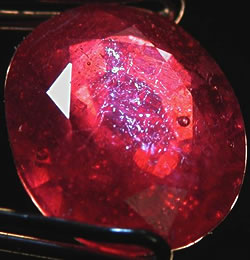
“Do you know why people are interested in jewels?” He asked. He touched a large red stone at the woman’s wrist. “It’s the way the visionaries experience things. Their world is made of light. Everyone wants to see things that way. Materially, jewels and gems are the closest thing to a preternatural experience.”


“You know, when anesthesia was first invented, many doctors didn’t want to use it,” he said. “They felt it would rob God of the earnest cries for help that came from those in time of trouble.”
“Anesthesia,” she said. “You can’t rob God.”
“I keep having this dream,” he said. “It’s a typical prison dream. I’m wandering around, doing what I please, choosing this, ignoring that. And then I realize I’m locked up.”
She looked at him, who was turning and folding his hands. Her own hands were trembling, and her mind darted, this way and that. Once, on a sunny day, much like this day, she had been driving down the road in their truck and she had seen a male cardinal that had just been struck by a car. It lay rumpled, on the road’s shoulder, and the female rose and dipped in confusion and fright about it, urging it to continue, to go on with her. Her mind moved like that, like that bird.

‘She sees Little Dot all the time now. She takes her to the supermarket and to water-ski show and roller-rinks. She buys her crayons and Big Gulps. But Little Dot hurts herself more and more. She goes for days without speaking. Little Dot is her own small keeper, and she is alone with an aloneness so heavy that she can hardly bear its weight. She is not like a mother to her, she knows that. She may even be adding to the terrible weight. Sometimes she thinks that each moment she spends with Little Dot is like a stone she gives the child, a small stone added to other stones.’
‘Don’t let Little Dot play with that bowl and spoon too long. It gets her too excited.’

‘At daybreak, it was still raining. Rosy-fingered dawn bloomed elsewhere, in higher, purer altitudes perhaps, where the heart beats more slowly.’
‘She was dreaming the things she dreamed in stolen houses—churches and flowers and suitcases, bowls and water and caves. She stirred and felt that he was standing over her, staring at her. And that was part of the dream, she thought, for him to be studying her so solemnly, as though he were choosing something. She was a woman in a house, sleeping. She looked at him, safe in her sleep-looking.
She looked at him and saw herself. The form he would have her assume, a woman in a house, sleeping.’
‘Dream of black triangles. All the time dreaming of black triangles. That’s number two on my checklist.’

‘In the silence, she could hear the dog drinking from his water bowl. One has these assumptions, she thought, these foolish assumptions about life. This is the day that the Lord hath made—that sort of thing. It proceeds from sunrise to sunset. Dare, don’t adapt. Rejoice. Be truthful. Get enough rest. Take it easy on the sun and salt. Love. Reflect. Praise. Learn. As a child, she had learned how to write with ascending accuracy between increasingly diminishing lines. That’s a child’s life. A child starts with intense admiration for the world. It’s him and the world. But there are too many messages. Most are worthless, but they still must be received. One must select and clarify. One must dismiss and forget. One is in a lighted room, then it turns dim. Inexplicably. One’s intense attachment turns to fear, then hate, then guilt. Finally, sorrow.’

“I’m set,” he said. “What are you going as?”
“Nothing. But I’m going.”
“Nothing is usually indicated by a dark forest, a wasteland tract, a desert, et cetera,” he said.
“Don’t,” she said.
“But instead you’re going as the path you could take. You feel the path you could take, the path you could have taken inside you. You feel it as unhappiness, an incompleteness.”
“Don’t,” she said.


‘YES! WE HAVE MASTECTOMY BATHING SUITS!”

“You’re Christians, right? I bet you are.”
“We believe in guilt and longing. Confession and continual defeat. The circle and the spiral.” The words filled up the room pleasantly like boulders.
Inside, on a white bamboo table, were a dish of peanuts, two empty martini glasses and a ceramic dildo.
Little Dot bounced on the bed which was covered by a dark, synthetic fur. “Eden,” she said. The sacrifice of Isaac.”
Smoke lay in levels in the room.

“NOW HAS THE FEELING OF CERTAINTY ABOUT IT. YET NOW IS NOT THE PRESENT MOMENT. NOW IS INCOMMENSURABLE WITH THE PRESENT MOMENT.”
HALLUCINOGENIC TATTOOS.

‘Little Dot told them her dream. It was always the same dream she told. She had a favorite bowl, no bowl that her parents had made but a little chipped china bowl, at the bottom of which was a rabbit in a garden. The rabbit wore a little dress. When Little Dot finished the soup or cereal in the owl, she would find the little rabbit its little dress and shoes. Little Dot loved the bowl. She thought it beautiful, its cracks and lines, the rabbit’s musing face worn pale by the scraping spoon. Each night she dreams she breaks it, it mends itself and becomes more beautiful still…’
“Can you remember yourself as a child? You used to limp for no reason and sprinkle water on your forehead to give the appearance of fevers. You used to squeeze the skin beneath your eyes to make bruises.”
“Mother,” I didn’t.
“You were a gloomy child, sweetie. You were always asking me gloomy riddles like, What would happen if a girl was tied up in a rug and thrown off the roof? What would happen if you put a girl in the refrigerator alongside the milk?”
“I chose the Episcopalians because they are aristocrats. Do you know, for instance, that they are thinner than any other religious group?”
‘The room’s light was now grey and the dog glowed whitely in it. A particularly inappropriate image crept open in her mind like a waxy cereus bloom. Little groups of Hindus sitting around a dying man or woman or child on the riverbank, waiting for death to come, chatting, eating, behaving in fact as thought life were a picnic.’


“There are too many messages in her life already. She is on some terrible mailing lists.”
“I got a letter from Greenpeace once. They’re the ones who want to stop the slaughter of the harp seals, right? Envelope had a picture of a cuddly little white earl and the words KISS THE BABY GOOD-BYE. You get that one?”
“You’re taking too many vitamins.”
“I am taking a lot of vitamins. You think that’s why I’m in love all the time. Maybe it’s a side effect. It got so, well I’d have a few drinks and I’d be incited to grief and confusion You know? I couldn’t even take a shower. The thought of standing alone under a shower, alone under those sheets, those strings of water, would give me the shakes. So I thought the old brain was shutting down, you know? So got to taking vitamins. I still don’t take showers. I give myself little kitty-baths.”
‘You’d have two little ones. They’d have freckles and be hyperactive.’
“You’d become a believer in past lives. You’d become fascinated with other forms of intelligent life. You’d become involve din the study of whale language.”
“Whales are poets who are in tune with every aspect of their world. They sing these songs, man.”
“Our songs are so messed up. You ever thought of that? Our songs are so garbled.”
“Who are you in love with?”

‘When she had been in Five North, there had been a girl who looked like Little Dot, but Little Dot grown older. She was there because she had carved YUCK on her stomach with a screwdriver. She had done it in front of a mirror, and to some, the markings on her mutilated flesh appeared foreign, holy and serene. They would ask to touch her stomach for luck. This girl, who looked like an older, more sorrowful Little Dot, had hurt herself in other ways at other times. She had broken her ankle once with a hammer. She said these things that she did to herself always cleared her thoughts and she felt better after. Didn’t everyone want to feel better after?”
‘You keep pretending and I’ll keep watching.
The river twisted through the trees. It might even have looked like the one her mother had been drifting down at the time, unaware that her daughter had died, almost died, Liberty forced herself to recall, her mother’s hobby had been to tie herself to a canoe and float down a quiet river, gazing through her facemask into the crystalline depths, collecting the white bones of mastodons.’

‘A thin line of perspiration lay prettily above her upper lip. She disliked her enormously.’
“What kind of vocabulary has he got? I was told that a German Shepherd could understand eight hundred words.”
“He knows a few words. Love, angel, ice cream, retribution…”
“Do you know what he told me they do there? People offer to drown for a dollar or two. They pretend to drown.”
“You know what they say about ‘gators? They say they’ve got seven emotions and they make a sound for each other one of them, but it’s all the same sound.”

‘WEBBY MATTER FOULED THE JALOUSIES.’

‘Your silence is a little black garden. You know everything by heart.’
‘If God could be seen and known in hell, hell in an instant would be heaven.’

‘IT IS LIVING AND CEASING TO LIVE THAT ARE IMAGINARY SOLUTIONS. EXISTENCE IS ELSEWHERE.’
“You understand life, don’t you?”
“I don’t think so, Daddy.”
“You understand that lurking in the heart of each pure, pretty day that is given to us is a snaky, malevolent, cold-blooded, creepy, diseased potentiality.”

‘He was a puzzle to them, as mysterious as a Communist.’

‘She stepped up into the living room, onto thick, whitish carpeting. The walls were the same color as the carpet—a peculiar shade, like the glabrous skin of some animal.’
She saw the end of it, returning.

“Champagne and granola. Your porridge. You’re just like Goldilocks.”
“Goldilocks, the first housebreaker.”
“He probably knows too much to have an actual personality. I like him very much.”

“This dog is very close to the shade of the walls, isn’t he? And the shade of the walls is exactly the color of the inside of Rothko’s forearm. That’s the color he always wanted as the backdrop for his paintings, you know. Pale ivory with a slightly yellowish cast, the color of Cellutex. It was the crook of the arm where he slashed himself, severing the brachial artery on February twenty-fourth, 1970.
Well, we all have our February twenty-fourth. I’ve always thought it was criminal the way Rothko painted pictures. Each time he made a picture, he committed a crime against the belief in the unquenchability of the human spirit.”
She stared at the painting, he stared at the painting. She felt that they were all on the verge of gulping for air in its presence.

“I met her in Rome on the Ostian Way, at that place where the three fountains are, that place where St. Paul lost his head. I’m sure you’re familiar with that story. When Paul was decapitated his head bounced three times and wherever it bounced, a fountain sprang up. Well I met her there. She was a splendid girl.”
“I’ve got these bad tunes playing in my head today. I’ve got these mean melodies.”
“I drank champagne with Jung on several occasions. We discussed the first thought of the One and Absolute Being.”
“What did Jung think the first thought of the Absolute Being was?”
“He believed His first thought was the consciousness of utter loneliness.”
“What would we pray for?”
“The usual. Understanding.”
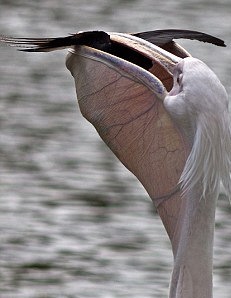
‘The summer that they were 15 was the summer that someone was mutilating the pelicans. Someone was capturing the birds, slicing off half their bills with a saw, and releasing them.’

‘Anything you wanted you could find in Blossum. If you knew what you wanted, you could buy a machine gun or a child. And it had some of the finest gospel singing in the state. “Bread of Heaven” sung almost every Wednesday night at the Church of the God of Prophecy on Marigold Street, had long been known to cause even the merciless to weep.’

“I’ve got to tell you something. I saw a pelican in the garden today, one of the maimed ones, one that’s had part of its bill sawed off. It was so close… it was.. I can’t get it out of my mind.”
“Birds are thoughts,” he said.
“Oh,” she exclaimed, hurt. “Don’t’ be so indifferent. ‘Birds are thoughts’ They’re not thoughts.”
“Sure they are,” he said. “You didn’t think that birds were all they were.”
His words, his presence, so familiar and yet so distant, had a peculiar effect on her. She thought that perhaps she had been the one stolen.
“It was a real thing,” she said sadly.
“That’s a very old notion. You can’t blame it on me,” he said. “There’s a second part too which follows logically enough. If birds are thoughts, the mind is a birdcage. You shouldn’t see such birds, girl. Poor girl.”
“Why would people do anything like that, why would they… I know you don’t know, it’s just I can’t imagine how they could do something like that, and do it over and over again.”
“They hate,” he said. “They’re good haters. They want to finish up things before they’ve finished up.”
“Do you ever think about the future?” She asked.
“How can you think about it?”
“Imagine it then.”
“Did you ever kiss a picture?” He asked. “Like a photograph or something in a magazine?”
“I guess.”
“The future’s like that. You’d be crazy to think it was real.”

“You’re a natural thief,” she said.
“We’re both thieves,” he said, “stealing God’s day.”

She’s in a coma. She won’t take no offense.
She was brought back, then almost lost to septicemia, but her poisoned blood was taken from her drop by drop and she was brought back again. Mistakes were made, but in the end, infection simplified her. It unadorned her. There would be no more babies for her. Her babies all went to live in that world where mistakes aren’t made.
You look on your nondeath as a threatening danger to you. You are perceiving your life, which you really look on as your nondeath, as a spectator. Oh, it’s possible to know so much today.


Her heart, as big as a baby’s head, beat on. It was going to beat on.

You’re a boy in love with lustral death.
“Stay, dear,” she said. “Stay with him. See how beautiful he is. He has the look of those heart is portrayed in the frescos of the monasteries of Athos. He is old, your man, he was born old, and has always been more ingenuous than you thought. He has their face, the ones who have always believed in the last temptations, the last miracles. Centuries ago he could have been a static. He could have been an anchorage in those rock abbeys of Turkey, in Cappadocia, living int hat fantastic landscape of stone, carving from rock his table and bed. You made him struggle to live in the world and he never wanted the world. It held no astonishments for him. You had come back and you were always bringing him back. He didn’t want love, he wanted mortifications. And all you could give him was love.”

‘She raised the heron’s head and looked into its eyes, which were strangely divided, even in death, one eye, it seemed, belonging to a creature still flying hard, hoping for the best, the other knowing there was another world but it was in the one just taken away. She lay down and spread the heron’s wing, moving it so it fell across her stomach. Cold seeped into her back. The bird’s dead soft wing covered her. I was a suicide, she said to it, and this is my dog. We moved like ghosts, my dog and I. We are seen, addressed, even desired, but we are as ghosts. She talked to that which lightly covered her, and looked at the night through which a full moon steadily rose.
One of life’s hopeful mysteries was supposed to be that everything that happens keeps on being a beginning, but what kind of hopefully mystery was that?
Ghosts can speak mostly readily with the dead, she assured it. They know no boundaries. They wander but are not free. They long for lives that never were and live outside them, close as they can, outside them. It’s easy there in many ways.’
‘Something was pounding, beating at the edges of her mind. She was with him, trying to tell him something. It was about the bread, the bread she did not want to leave behind because she feared the birds would find it. The birds would come and eat it and then they would not be able to fly over the dark water they must cross. They would avoid the water and then the waters would become more frightening than the birds…
She was with him. She had always been with him. This was not so long ago.’

“You know when I die, I want to be buried by lions. I’ve always wanted that, ever since I was little.”

‘She felt a certain diminishment. She looked at herself—breasts, belly, legs—in amazement. Still there. Although she felt that large portions of her had been carried off like so many mouthfuls. She could have been born in a dish.’
“You don’t love me. You never buy me flowers. You don’t wear a wedding ring and you don’t kiss my pussy.”


“The desert. gulches, canyons, playas, oddities of erosion, mud palisades and him. Awesome stillness. Desolate grandeur. And that maniac.”
“I told him the first time God carried an egg around for seven days he ended up dropping it.”

Wednesday, August 28, 2024
TROPISMS - Nathalie Sarraute
"I started to write in 1932, when I composed my first Tropism. At that time, I had no preconceived ideas on the subject of literature, and this one, as were those that followed it, was written under the impact of an emotion, of a very vivid impression. What I tried to do was to show certain inner "movements" by which I had long been attracted; in fact, I might even say that, ever since I was a child, these movements, which are hidden under the commonplace, harmless appearances of every instant of our lives, had struck and held my attention. In this domain, my first impressions go back very far.
These movements, of which we are hardly cognizant, slip through us on the frontiers of consciousness in the form of undefinable, extremely rapid sensations. They hide behind our gestures, beneath the words we speak, the feelings we manifest, are aware of experiencing, and able to define. They seemed, and still seem to me to constitute the secret source of our existence, in what might be called its nascent state.
And since while we are performing them, no words express them, not even those of the interior monologue--for they develop and pass through us very rapidly in the form of frequently very sharp, brief sensations, without our perceiving clearly what they are--it was not possible to communicate them to the reader otherwise than by means of equivalent images that would make him experience analogous sensations. It was also necessary to make them break up and spread out in the consciousness of the reader the way a slow-motion film does. Time was no longer the time of real life, but of a hugely amplified present.
These movements seemed to me to be veritable dramatic actions, hiding beneath most conversations, the most everyday gestures, and constantly emerging up to the surface of the appearances that both conceal and reveal them.
The dramatic situations constituted by these invisible actions interested me as such. Nothing could distract my attention from them and nothing should distract that of the reader; neither the personality of the characters nor the plot, by means of which, ordinarily, the characters evolve. The barely visible, anonymous character was to serve as a mere prop for these movements, which are inherent in everybody and can take place in anybody, at any moment.
Thus my first book is made up of a series of movements in which, like some precise dramatic action shown in slow motion, these movements, which I called Tropisms, come into play. I gave them this name because of their spontaneous, irresistible, instinctive nature, similar to that of the movements made by certain living organisms under the influence of outside stimuli, such as light or heat.
This analogy, however, is limited to the instinctive irresistible nature of the movements, which are produced in us by the presence of others, or by objects from the outside world. It obviously never occurred to me to compare human beings with insects or plants, as I have sometimes been reproached with doing.
Tropisms are still the living substance of all my books, the only difference being that the time of the dramatic action they constitute is longer, and there is added complexity in the constant play that takes place between them and the appearances and commonplaces with which they emerge into the open: our conversations, the personality we seem to have, the person we seem to be in one another's eyes, the stereotyped things we believe we feel, as also those we discover in others, and the superficial dramatic action constituted by plot, which is nothing but a conventional code that we apply to life."
"Self awareness is the only true measure of existence." --Galouye
............
Simulations
'In this passage to a space whose curvature is no longer that of the real, nor of the truth, the age of simulation thus begins with a liquidation of all referentials--worse: by their artificial resurrection in systems of signs, a more ductile material than meaning, in that it lends itself to all systems of equivalence, all binary oppositions and all combinatory algebra. It is no longer a question of imitation, nor of reduplication, nor even of parody. It is rather a question of substituting signs of the real for the real itself, that is, an operation to deter every real process by its operational double, a metastable, programmatic, perfect descriptive machine which provides all the signs of the real and short-circuits all its vicissitudes. Never again will the real have to be produced--this is the vital function of the model in a system of death, or rather of anticipated resurrection which no longer leaves any chance even in the event of death. A hyperreal henceforth sheltered from the imaginary, and from any distinction between the real and the imaginary, leaving room only for the orbital recurrence of models and the simulated generation of difference.'
............
'When the real is no longer what it used to be, nostalgia assumes its full meaning. There is a proliferation of myths of origin and signs of reality; of second-hand truth, objectivity and authenticity. There is an escalation of the true, of the lived experience; a resurrection of the figurative where the object and substance have disappeared. And there is a panic-stricken production of the real and the referential, above and parallel to the panic of material production: this is how simulation appears in the phase that concerns us--a strategy of the real, neo-real and hyperreal whose universal double is a strategy of deterrence'
............
'The duplication is sufficient to render both artificial.'
............
"Everything is metamorphosed into its inverse in order to be perpetuated in its purged form. Every form of power, every situation speaks of itself by denial, in order to attempt to escape, by simulation of death, its real agony. Power can stage its own murder to rediscover a glimmer of existence and legitimacy. In olden days the king (also the god) had to die--that was his strength. Today he does his miserable utmost to pretend to die, so as to preserve the blessing of power. But even this is gone.
To seek new blood in its own death, to renew the cycle by the mirror of crisis, negativity and anti-power: this is the only alibi of every power, of every institution attempting to break the vicious circle of its irresponsibility and its fundamental non-existence, of its deja-vu and its deja-mort."
..............
'The balance of terror is the terror of balance.'
...............
-
But the opposite then, over here. I want to spit myself out of my own mouth. We are not what we feed on. Always mad dash to a gem—movie, bo...